Document Scanning: Why Businesses Are Moving Towards Digital Document Management
Businesses generate thousands of documents every year. Contracts, invoices, employee records, customer files, technical drawings and financial paperwork all play an important role in day-to-day operations. However, storing and managing large volumes of paper documents can become expensive, time-consuming and inefficient. As organisations continue embracing digital transformation, document scanning has become one of the most effective ways to modernise document management while improving accessibility and security.
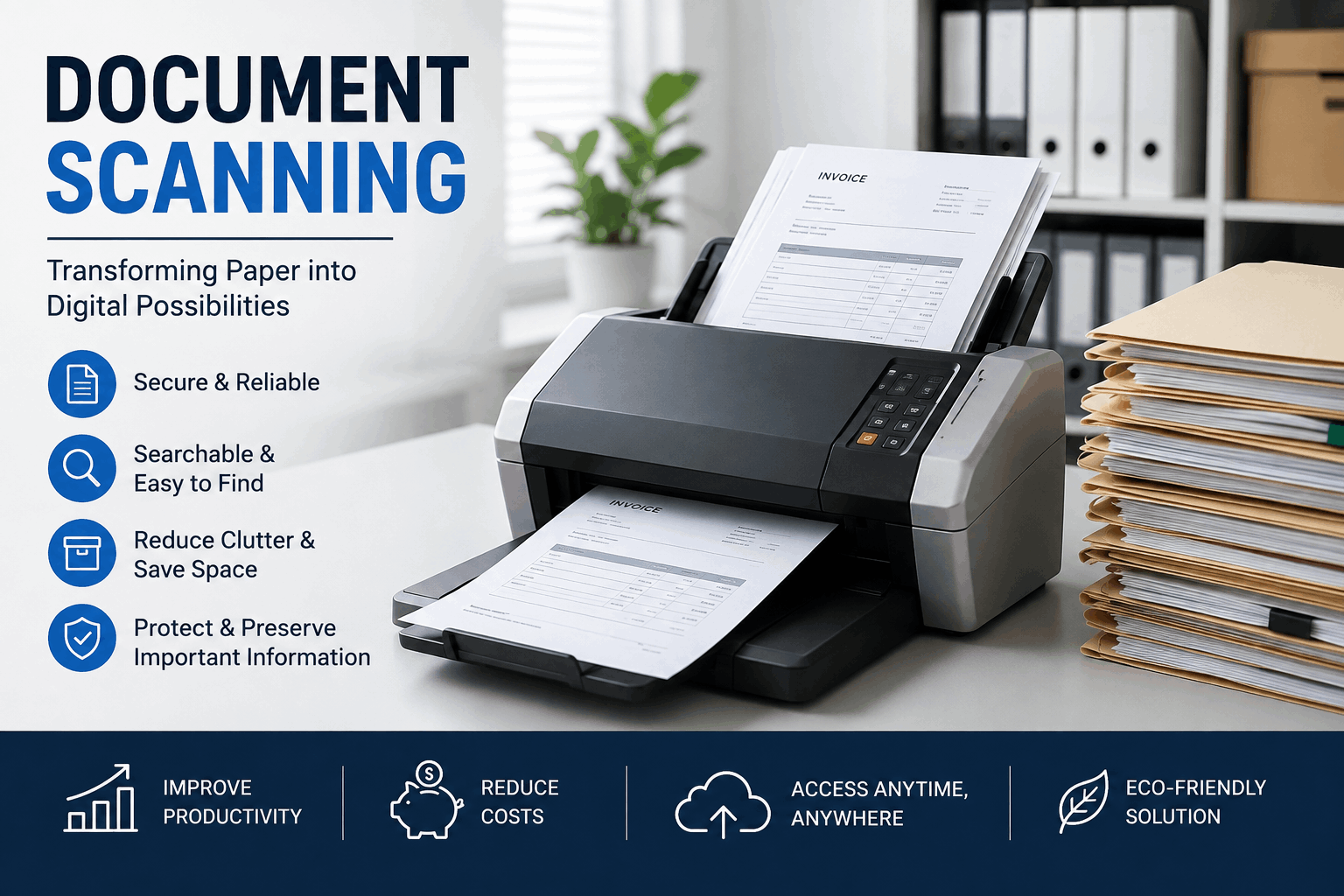
For organisations considering Document Scanning, the process offers far more than simply converting paper into digital files. Professional document scanning creates organised, searchable electronic records that improve productivity, reduce storage costs and make important business information available whenever it is needed. Whether scanning a small archive or millions of pages, digitisation helps businesses work more efficiently while supporting long-term growth.
Document scanning is the process of converting physical paperwork into digital documents using high-resolution scanning equipment. Once scanned, documents can be stored electronically within secure document management systems, making them easy to search, retrieve and share. Many systems also use Optical Character Recognition (OCR), allowing users to search documents by keywords rather than manually browsing through folders.
One of the biggest advantages of document scanning is the time it saves. Searching through filing cabinets or archive boxes for a single document can take several minutes, particularly if records have accumulated over many years. Digital documents can often be located in seconds using document names, customer references, invoice numbers or searchable text, allowing employees to spend more time on productive work.
Businesses across almost every sector benefit from document scanning. Legal firms digitise client files to improve case management, healthcare providers convert patient records into secure electronic files, accountants scan financial records for easier retrieval, while educational institutions preserve historical documents and student records in digital archives. Every organisation handling paperwork can improve efficiency through effective digitisation.
Space savings are another major benefit. Filing cabinets, archive rooms and off-site storage facilities occupy valuable office space that could be used more productively. By converting paper records into digital files, businesses can reduce physical storage requirements while lowering the ongoing costs associated with maintaining paper archives.
Security has become increasingly important as organisations manage growing volumes of sensitive information. Paper documents can be misplaced, damaged or accessed by unauthorised individuals. Digital document management systems allow organisations to control who can view, edit or share documents through user permissions, password protection and encryption. Regular backups also provide protection against accidental loss or physical damage caused by fire, flooding or theft.
Searchability transforms the way businesses use information. OCR technology enables scanned documents to become fully searchable, allowing employees to locate specific names, dates, account numbers or phrases almost instantly. This capability is particularly valuable for organisations managing large document archives or responding to customer enquiries where rapid access to information improves service.
Document scanning also supports compliance with document retention requirements. Many industries must retain records for several years while ensuring they remain secure and easily accessible. Digital document management systems make it simpler to organise retention schedules, archive records appropriately and retrieve documents quickly during audits or regulatory inspections.
Remote and hybrid working have further increased demand for digital document management. Employees working from home or travelling between offices require secure access to business records without relying on physical paperwork stored in one location. Digitised documents can be accessed securely from authorised devices, allowing teams to collaborate efficiently regardless of where they are working.
Professional document scanning services can handle almost every type of document. Standard office paperwork, invoices, personnel records, legal documents, medical files, engineering drawings, architectural plans, photographs and historical archives can all be digitised using specialist scanning equipment. Large-format documents and bound materials can also be scanned while preserving image quality and document integrity.
Quality assurance forms an essential part of the scanning process. Professional providers carefully prepare documents by removing staples, repairing damaged pages where necessary and ensuring pages are correctly ordered before scanning begins. Images are then checked for clarity, completeness and accuracy before documents are indexed into logical filing structures that make retrieval simple.
Technology continues to improve digital document management. Cloud-based storage allows authorised users to access files securely from almost anywhere, while automated workflows enable documents to move electronically between departments without the delays associated with physical paperwork. Integration with existing business systems further improves efficiency by reducing duplicate data entry and simplifying routine processes.
Environmental sustainability is another benefit of document scanning. Reducing paper storage encourages businesses to rely less on printed documents, lowering paper consumption, reducing printing costs and decreasing waste. Many organisations include document digitisation within their wider sustainability programmes as part of their commitment to reducing environmental impact.
Choosing the right document scanning provider is an important decision. Businesses should consider scanning quality, data security procedures, confidentiality, turnaround times, indexing capabilities and experience handling sensitive information. A reliable provider will also understand relevant data protection requirements and ensure information is handled securely throughout the project.
Ultimately, Document Scanning enables businesses to modernise the way they manage information while improving productivity, security and accessibility. By converting paper records into organised digital files, organisations can reduce storage costs, support flexible working, improve customer service and create a more efficient working environment. As digital transformation continues across every industry, document scanning remains one of the most valuable investments businesses can make in improving their document management processes.