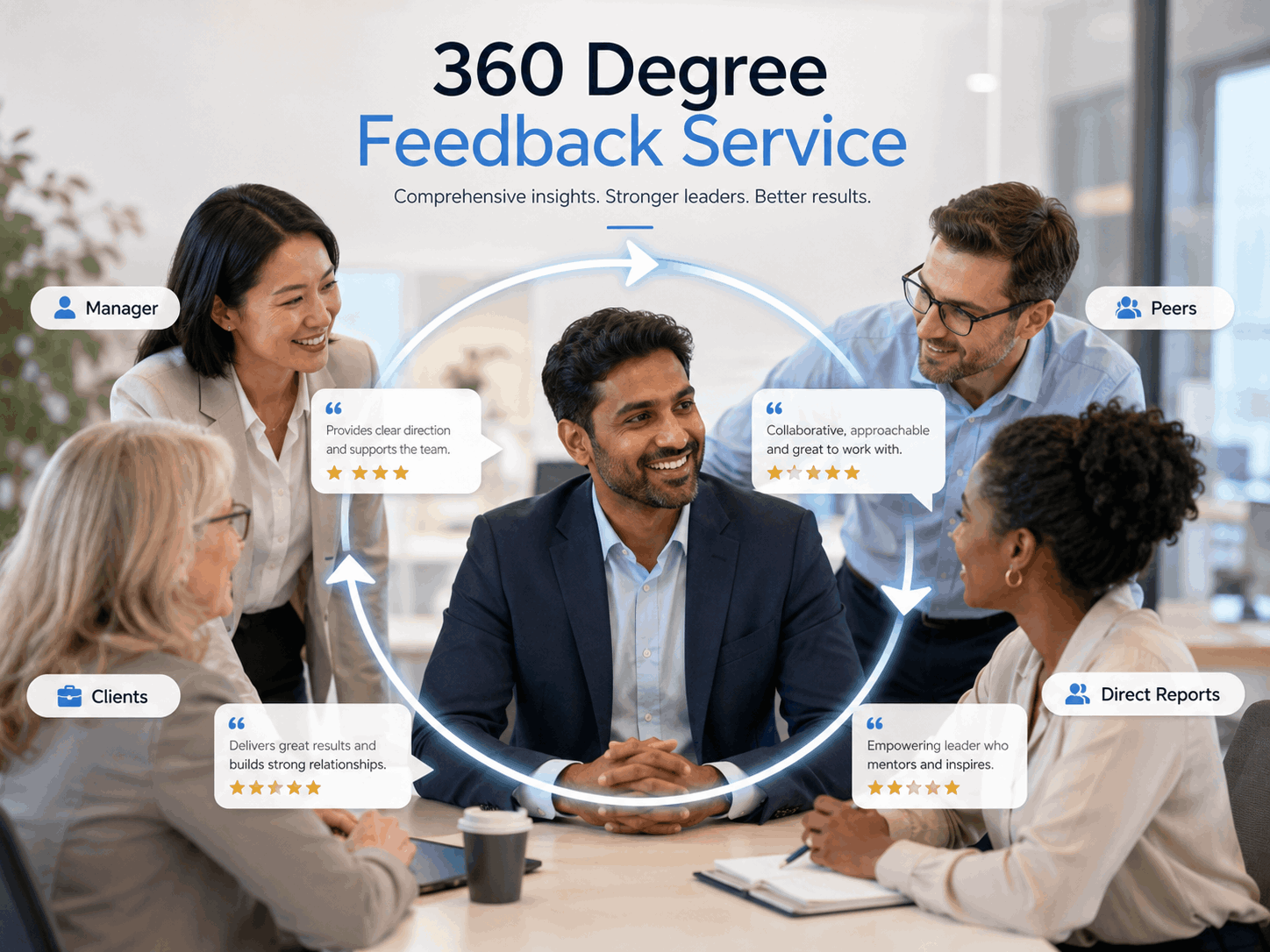
360 Degree Feedback Service for Workplace Development and Leadership Insight
Organisations increasingly recognise that effective development depends on useful, balanced and practical feedback. Standard performance reviews can provide important information, but they often rely on a limited viewpoint. In modern workplaces, people interact with managers, colleagues, direct reports, senior leaders and external stakeholders, so a broader approach can provide more meaningful insight.
A 360 degree feedback service helps organisations gather structured feedback from multiple sources in a confidential and organised way. This can support leadership development, management training, employee growth and wider workplace improvement. By collecting views from different people, the process can reveal strengths, blind spots and behaviour patterns that may not appear in a traditional review.
One of the main advantages of using a structured service is consistency. Questions can be designed around relevant workplace behaviours such as communication, teamwork, decision-making, accountability, leadership, problem-solving and support for others. This helps ensure that feedback is focused, fair and useful rather than based on vague opinions or isolated comments.
Confidentiality is an important part of the process. Employees and colleagues are more likely to give honest feedback when they feel their responses will be handled appropriately. A well-managed feedback process should explain how responses are collected, how anonymity is protected and how the results will be shared. Clear communication helps build trust and encourages more meaningful participation.
A good service should also make the feedback easy to understand. Reports should highlight key themes, strengths and development areas in a clear format. Instead of overwhelming individuals with raw comments, the information should be organised in a way that supports reflection and action. This makes the results more practical for both the individual and the organisation.
Managers often benefit from this type of feedback because their behaviour affects team morale, communication and performance. A manager may believe they are approachable, clear or supportive, but feedback from direct reports and colleagues may show a different picture. This wider perspective can help managers understand the real impact of their leadership style.
A 360 process can also support employees who are preparing for leadership roles. It can identify development needs before someone moves into a more senior position. For example, feedback may show that an employee is technically strong but needs to improve delegation, communication or conflict management. This allows development plans to be created before responsibilities increase.
Action planning is essential after feedback has been received. A service should not simply collect information and leave individuals to interpret it alone. The value comes from turning feedback into practical next steps. This may involve coaching, training, mentoring, development planning or follow-up reviews to measure progress.
For organisations, feedback results can also reveal wider trends. If several managers receive similar feedback about communication or team support, it may indicate a broader training need. If employees across departments highlight similar concerns, the organisation can respond with targeted development initiatives. This makes the process useful beyond individual improvement.
The design of the questionnaire matters. Questions should be relevant to the role, level and purpose of the feedback. A senior leader may need feedback on strategy, influence and organisational communication, while a team manager may need more focus on delegation, coaching and day-to-day support. Tailoring the process improves the quality of the results.
Technology can make the process easier to manage. Online questionnaires, automated reminders and digital reporting can reduce administration and improve completion rates. This is particularly useful for larger organisations or teams spread across different locations. However, the system should still be simple for participants to use.
A 360 degree feedback service should be positioned as a development tool, not a punishment or criticism exercise. If people believe the process is being used unfairly, trust can be damaged. Clear messaging is important so that participants understand the purpose is to support growth, improve communication and strengthen workplace performance.
It is also important to choose the right respondents. Feedback should come from people who have enough direct experience of working with the individual to comment fairly. Including too many unsuitable respondents can reduce the quality of the results. A balanced group usually provides the most useful insight.
Follow-up can make the process more effective. After development actions have been agreed, progress should be reviewed over time. This helps ensure that feedback leads to real improvement rather than becoming a one-off exercise. Repeating the process at suitable intervals can also show whether behaviours have changed.
In summary, a 360 degree feedback service can help organisations improve leadership, communication and workplace development by collecting balanced feedback from multiple sources. When the process is confidential, well designed and supported by action planning, it can provide valuable insight for individuals and teams. Used correctly, it encourages self-awareness, stronger performance and a more constructive feedback culture.